




I found Paired: Couples & Relationship most useful when I treated it as a small, regular conversation habit rather than a solution for relationship problems. This lifestyle app turns time together into guided questions, quizzes, advice, and couple-focused games, giving two people an easier way to talk when everyday routines have made conversations feel repetitive. I would recommend trying it to a partner who wants more intentional connection without planning elaborate dates or reading a relationship book together.
The app is free to download, which makes the first step uncomplicated. Its listing also includes in-app purchases ranging from $0.99 to $99.99 per item, so the important distinction is between being able to start without paying and deciding later whether any optional purchase is worth it. I would not describe the whole experience as free simply because installation costs nothing. Instead, I see the free entry as a chance to understand the format before spending anything.
How Paired works as a relationship habit
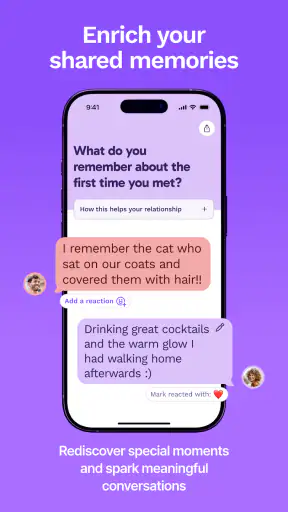
At its best, Paired gives a couple a prompt at exactly the moment when neither person knows how to begin a meaningful conversation. That sounds simple, but it solves a real problem. Many couples care about each other and still end up discussing schedules, errands, bills, or whatever needs attention next. A question designed for partners can move the conversation somewhere more personal without one person having to invent the subject.
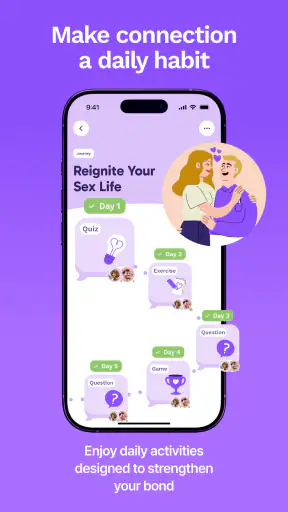
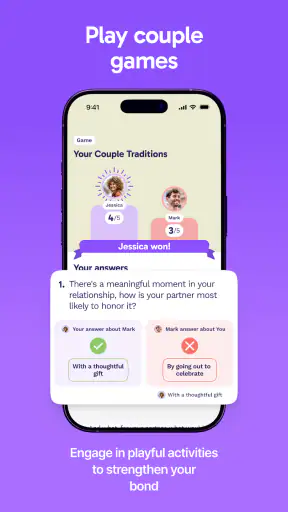
I like that the app is built around participation from two people rather than presenting relationship advice as something one partner studies alone. Questions and quizzes can create a shared activity, while advice gives the conversation a little direction. The games are especially suitable for couples who want something lighter than a serious discussion. The result is less like a formal course and more like a collection of ways to check in with each other.
A realistic use case is a couple sitting together after dinner with only fifteen minutes before one person has to return to work or handle chores. Instead of opening separate social feeds, they can use one prompt as a starting point. One person might answer first, the other might add a different perspective, and the conversation can stop naturally when time runs out. That matters because a useful relationship habit should fit ordinary evenings, not require perfect free time.
I would also use it during a quiet weekend when a couple wants to reconnect but does not want another generic date-night suggestion. The value is not that every question will be profound. The value is that the app reduces the effort required to begin. If a prompt feels too personal for the moment, you can move on and return when both people are more receptive.
The free starting point and the purchase decision
The cost structure deserves a careful look. Paired is listed as free, while optional in-app purchases are available individually within the stated price range. That means a cautious user can install it, explore the free experience, and judge whether the format suits the relationship before considering paid content. I see that as a sensible arrangement for an app whose usefulness depends heavily on personal chemistry.
What I would not do is buy an expensive option simply because a couple is going through a difficult period. A purchase can provide more material, but it cannot make two people answer honestly, listen patiently, or agree on what to do next. The paid value is therefore strongest for couples who already enjoy the question-and-quiz format and expect to use it repeatedly. It is much harder to justify for someone who only wants a single conversation starter.
Because the available purchase choices can vary in size and purpose, I would inspect the wording shown inside the app before confirming anything. I would also decide in advance whether I am paying for variety, a longer-term routine, or a particular type of advice. That small pause prevents the common mistake of treating an emotional need as a reason to buy immediately.
The free access is most valuable as a trial of the method. Does your partner enjoy answering prompts, or do they experience them as an assignment? Do you both prefer playful quizzes, reflective questions, or practical advice? Those answers tell you more about likely value than the app’s rating alone. If the free material already leads to natural conversations, additional content may make sense. If both of you avoid opening it, a purchase will not fix the underlying mismatch.
What the app delivers beyond ordinary conversation
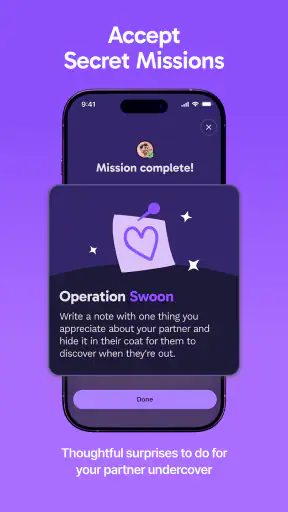
Compared with simply asking a partner, “How was your day?”, Paired gives the conversation a defined subject. That structure can be helpful for people who care deeply but struggle to express themselves spontaneously. It also balances different moods: a couple can choose something playful when they want to laugh, or something more thoughtful when they are ready to discuss the relationship.
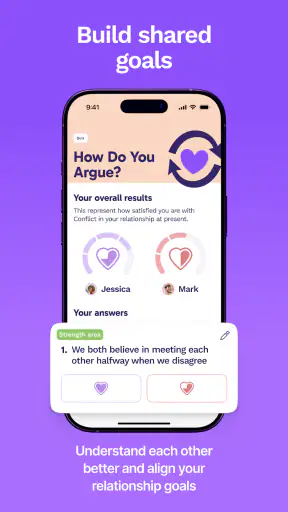
Compared with general self-help articles, the app is more interactive. Reading advice alone can create the feeling of progress without requiring a real exchange. Here, the useful moment comes when both partners respond and react. I consider that an important strength: the app is not merely information about relationships; it is a prompt to do something together.
It also differs from couples therapy. Therapy offers a trained professional who can notice patterns, manage conflict, and help when conversations become unsafe or unproductive. Paired cannot take that role. I would use it for maintenance, curiosity, and small moments of connection, not as a substitute for professional support when a couple is dealing with serious distress, coercion, abuse, or a problem that repeatedly escalates.
Another practical difference is privacy in the social sense: the activity is designed for the couple rather than for public sharing. That makes it easier to discuss personal preferences or memories without turning the interaction into performance. Even so, I would still read the app’s current on-screen explanations about how answers are handled before entering anything especially sensitive. Relationship conversations can contain details people would not want to treat casually.
Small habits that make the experience work better
My first tip is to agree on a low-pressure rule before starting: either person can skip a question without having to explain immediately. That keeps the activity from becoming an interrogation. A prompt is an invitation, not evidence that someone owes a particular answer. This is especially useful when one partner is tired, distracted, or not ready for a serious topic.
My second tip is to avoid using the app only after an argument. If every session appears during conflict, the other person may begin to associate it with criticism or emotional labor. A short, neutral check-in on a calm day gives the questions a better chance of feeling like connection rather than diagnosis. I would rather use one prompt regularly than rush through a long session once a month.
A third useful approach is to turn an answer into a concrete follow-up. If a question reveals that one partner misses uninterrupted time together, do not leave the insight inside the app. Decide what a small change could look like this week. The app is strongest when it opens a door and the couple walks through it themselves. Without that follow-through, even a thoughtful quiz becomes a momentary distraction.
I would also separate playful sessions from serious ones. If the evening is meant to be light, choose a game or an easy question and stop while the mood is still good. If the goal is to discuss expectations or recurring tension, choose a calm time when both people can listen. Mixing a heavy topic into a joking session can make one partner feel ambushed, while forcing humor into a serious conversation can feel dismissive.
Where the experience can feel limited
The biggest limitation is that a prompt cannot guarantee a good conversation. Some couples naturally enjoy structured questions; others find them artificial and would rather talk while walking, cooking, or driving. If your partner dislikes app-mediated intimacy, repeatedly suggesting Paired may create more resistance than closeness. In that situation, a shared activity without a screen may be a better alternative.
There is also a risk of confusing activity with improvement. Completing quizzes can feel satisfying, but a couple may still avoid the practical issue that caused tension in the first place. I would treat progress inside the app as a starting signal, not a scorecard. The meaningful result is what changes in the way you listen, respond, and make decisions afterward.
Advice can have limits too. Relationship guidance must be interpreted in context, and a short piece of app content cannot know every detail of a couple’s history, culture, communication style, or safety situation. I would be cautious about applying a general suggestion rigidly. If a recommendation makes one partner feel pressured or blamed, pause and discuss that reaction instead of assuming the app must be right.
The purchase model may also create friction for people who want a completely open library from the beginning. Free access lowers the barrier to trying the app, but optional paid items mean the long-term experience may involve decisions about what to unlock. That is not automatically a problem, yet it affects value. Someone seeking a one-time, all-inclusive resource may prefer a book, a single guided exercise, or a professional consultation instead.
Who is likely to get the most value
I think Paired suits couples who are generally willing to talk but need a nudge to make that happen. It can work well for partners living together, people managing busy schedules, and couples who want a regular evening ritual that is more intentional than watching another show. It is also a reasonable option for couples who enjoy quizzes and games but want those activities to focus on their relationship rather than general entertainment.
It may be particularly helpful when the two partners communicate differently. One person may be comfortable raising personal subjects while the other needs time and structure. A shared prompt gives both people the same starting point and can reduce the feeling that one partner is always responsible for initiating meaningful conversations. The more uneven the communication styles, the more important it becomes to keep the activity voluntary and non-judgmental.
I would skip it if you are looking for clinical treatment, crisis support, or a professional assessment of your relationship. I would also skip it if your partner has clearly said they do not want this kind of guided activity. Consent matters even in something as harmless-looking as a quiz. Finally, if you already have a communication routine that works and you dislike phone-based couple activities, Paired may add little compared with simply protecting time for the conversations you already have.
Age is worth noticing before installation. The app carries a Mature 17+ content rating, so I would not treat it as a general family app or something intended for younger users. That rating is another reason to consider the context in which the app will be used, especially if a device is shared.
Device details and overall confidence
Paired comes from the developer Paired - Relationship Advice & Quiz for Couples. It was released on September 17, 2020, and the current version is 26.33.0. The minimum operating system is Android 7.1, which makes it accessible to many older Android devices. I would still check the app page on the particular phone before installing, especially if the device has limited storage or an older software setup.
The app has built a substantial audience, with over one million installs, a 4.6 average rating, and around sixty-three thousand ratings. Those figures suggest that the format has broad appeal, but they do not predict whether your partner will enjoy it. A relationship app is unusually dependent on two-person participation, so personal fit matters more here than popularity.
In my experience, the strongest reason to try it is convenience. It places a ready-made conversation framework close at hand, which is useful when good intentions keep losing to tiredness and routine. The strongest reason not to rely on it too heavily is that convenience can become a substitute for genuine effort. No prompt can listen for you, apologize for you, or turn an insight into a changed habit.
My buy-or-skip verdict
I would try Paired for free if I wanted a gentle way to create better conversations with a willing partner. The free entry makes that experiment reasonable, and the mix of questions, quizzes, advice, and games gives couples several ways to participate without committing to one mood. I would consider an in-app purchase only after seeing repeated use and clear value from the free experience, not as an emergency fix for relationship trouble.
For the right couple, its value is not measured by how many prompts are completed. It is measured by whether the app helps two people notice something, say something they had been avoiding, or make a small plan they actually keep. That is a modest goal, but it is realistic and useful.
My final recommendation is therefore conditional but positive: install it if both of you are curious and can approach it without pressure. Start with a short session, allow skips, and turn useful answers into real-world actions. Skip it if you want therapy, dislike structured digital activities, or expect an app to repair a problem that requires deeper support. Used as a low-pressure conversation tool, Paired can earn its place in a couple’s routine without pretending to replace the relationship itself.


